Understanding the 2026 APCM Framework
The healthcare landscape in 2026 will be defined by a shift away from episodic treatment toward a more holistic, continuous model of support. At the center of this transformation is Advanced Primary Care Management (APCM), a framework designed by the Centers for Medicare & Medicaid Services (CMS) to simplify how practices deliver and receive support for comprehensive care. Unlike previous models that required clinicians to track every minute of their time, APCM focuses on the practice’s capability to provide essential services whenever the patient needs them.
A Unified Approach to Care Management
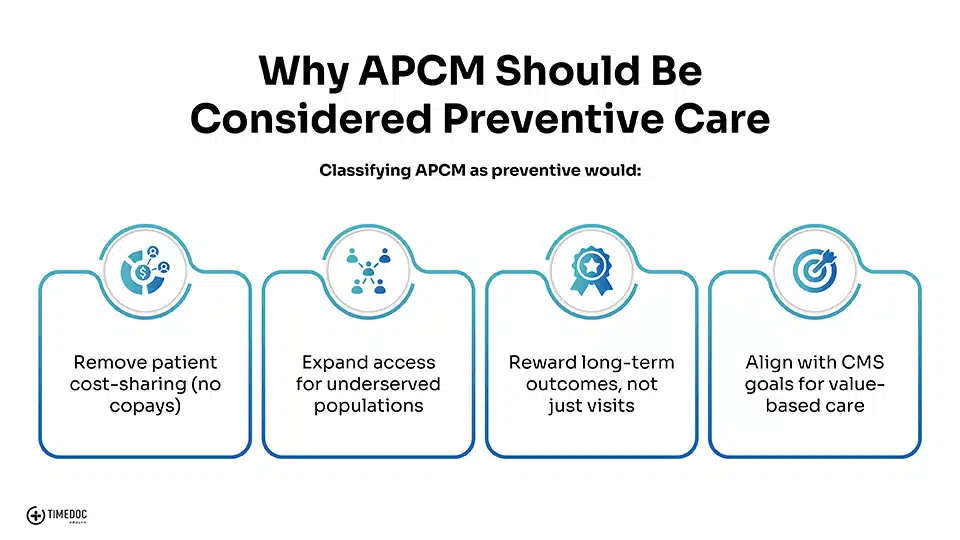
Advanced Primary Care Management acts as a unifying umbrella, bringing together several previously fragmented services. It incorporates the best elements of Chronic Care Management, Principal Care Management, and Transitional Care Management into a single, cohesive structure. By moving to this bundled model, primary care providers are empowered to act as the central focal point for all of a patient’s medical and social needs.
The transition to APCM represents a significant victory for clinical efficiency. Because the model is not based on time-tracking thresholds, care teams can spend less time watching the clock and more time addressing the specific, shifting needs of their patients.
Essential Service Capabilities
For a practice to offer these services, they must maintain a specific set of capabilities that ensure patients remain supported between traditional office visits. These requirements are built on the foundation of accessibility and coordination.
A cornerstone of the program is a commitment to continuity, ensuring that patients work with designated team members who understand their history and can facilitate routine appointments. This is paired with providing 24/7 access, a requirement of legacy CCM programs, which ensures patients are able to reach a member of their care team to discuss urgent needs. These measures are specifically designed to reduce unnecessary emergency room visits and lower the total cost of care.
Behind the scenes, the practice must manage a comprehensive, digital care plan. This living document tracks medical goals, psychosocial needs, and functional assessments, and it must be accessible to both the patient and any other providers involved in their journey. When a patient moves between settings, such as from a hospital back to their home the APCM framework ensures a coordinated transition, with the care team providing follow-up communication within the first week of discharge.
Data-Driven Population Health
In 2026, the use of advanced analytics is no longer optional for high-performing practices. APCM requires providers to analyze population data to identify gaps in care and risk-stratify their patients. By using electronic data to identify those most at risk for complications, practices can target their interventions where they will have the greatest impact on health outcomes.
Communication has also been modernized within this framework. Practices must offer asynchronous digital options like secure messaging and patient portals. This allows for a constant touch approach to care that fits into a patient’s daily life rather than requiring them to schedule a phone call for every minor question.
Integration of Behavioral Health
A major highlight of the 2026 update is the seamless integration of behavioral health support. CMS has introduced specific add-on codes that allow mental health services to be managed within the primary care workflow. This change acknowledges that managing chronic physical conditions often requires addressing a patient’s mental and emotional well-being simultaneously.
By adopting the APCM framework, healthcare organizations are not just participating in a new billing model; they are building a more resilient, patient-centered foundation for the future of medicine.
Optimize Your Transition with TimeDoc Health
Navigating the shift to Advanced Primary Care Management doesn’t have to be a solo journey. TimeDoc Health provides the integrated platform, clinical staffing support, and data-driven insights needed to operationalize APCM at scale. By connecting your EHR with our turnkey care management solution, your practice can close care gaps, improve patient outcomes, and capture sustainable revenue all without the administrative burden of time-tracking.