Client Stories from the Ground Level
Written by Kristen Glover, Senior Director of Client Success
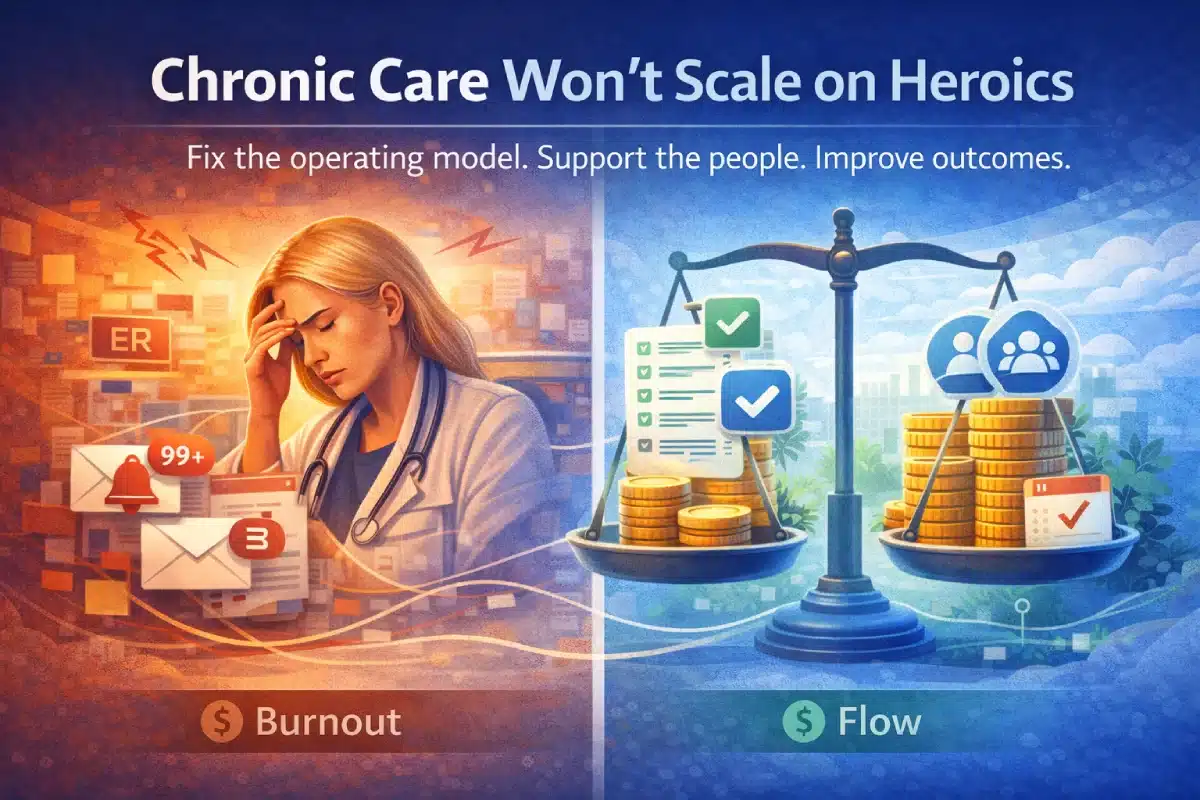
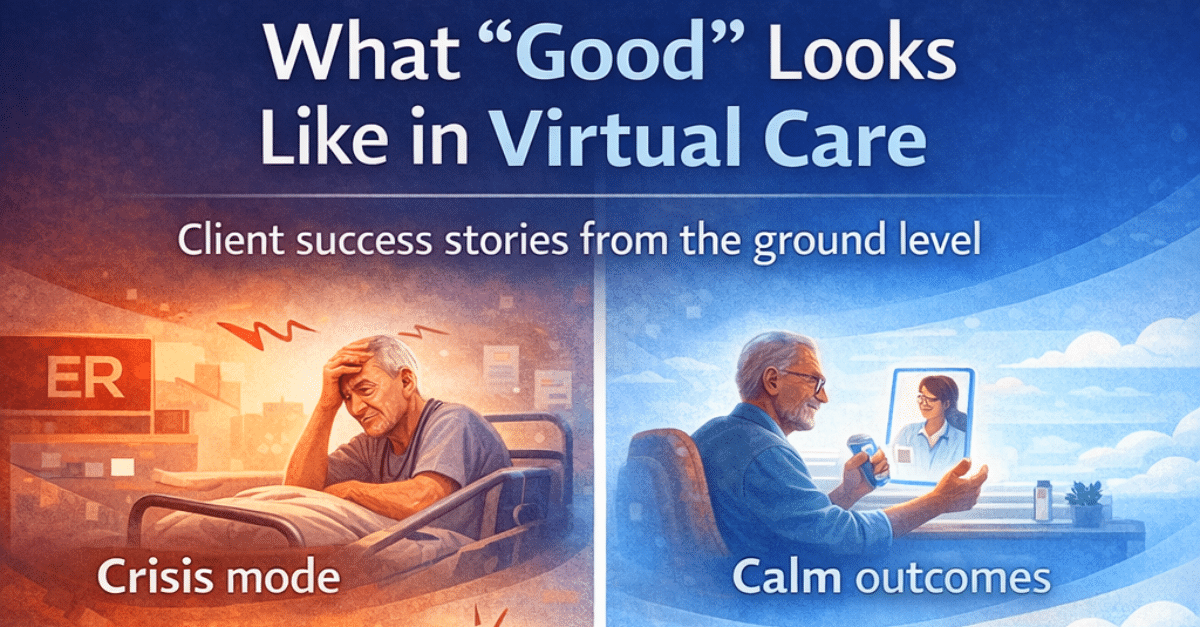
When I talk with health system teams about virtual care, the moments that stay with me aren’t about the technology, they’re about relief. It’s hearing, “We’re not constantly putting out fires anymore.” It’s a care manager who finally has space to focus on the patient in front of them instead of the next urgent message. It’s a provider who can get back to practicing at the top of their license because the inbox isn’t overflowing with non-urgent needs. And it’s patients who feel supported between visits, instead of waiting until things get bad enough to go to the ED. It’s about delivering the standard of care that is expected out of your virtual care management partner.
That kind of change doesn’t happen because an organization “adds a program.” It happens when the day-to-day work becomes clearer, more shared, and more predictable. The strongest client outcomes I’ve seen come from practical decisions that make life easier for the people delivering care: clear playbooks, consistent outreach rhythms, and closed-loop processes that ensure no one is guessing who owns the next step. When the workflow is designed with empathy for the clinic’s reality, virtual care becomes less of a burden and more of a support system.
What “good” often looks like in practice is simple: fewer surprises and fewer gaps. High-risk patients don’t fall through the cracks after discharge. Small changes don’t become big crises because someone noticed a trend early and had a clear path to respond. Patients know where to turn for help, and teams have the structure to respond in a way that’s timely and human. Over time, consistency matters, it reduces avoidable utilization, lowers phone and inbox burden, and creates a calmer experience for both patients and staff.
If you’re exploring how to get more value out of CCM, RPM, or other virtual care programs — or you want to see what “good” looks like when it’s actually working on the ground — our upcoming session is built for that. On March 18, 2026 at 12 PM EST, Chris Phillips, RN, CCM, CPHQ will share lessons from real client journeys in “From Overload to Optimized: Clinical Delivery Improvement That Actually Works,” including the delivery changes that helped teams close gaps, support high-risk populations more consistently, and shift care management from reactive to proactive.
Register here: https://www.timedocsolutions.com/webinar2026.